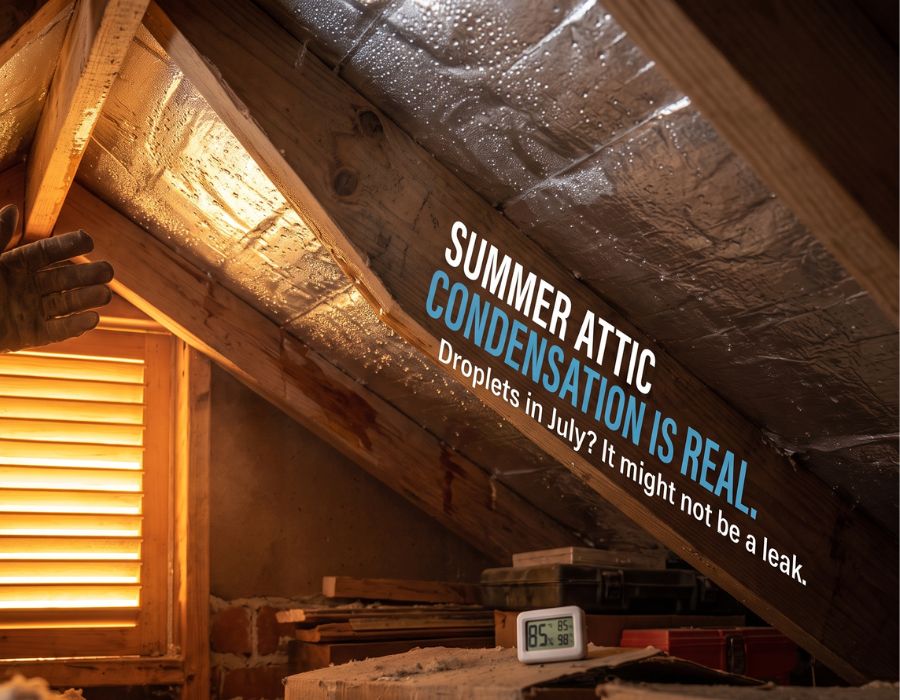
Finding water droplets in your attic on a hot July day can be alarming, especially if it hasn’t rained. In many Pennsylvania and Maryland homes, the source is summer attic condensation rather than an active roof leak.
Condensation forms when warm, humid air contacts a cooler surface, such as air-conditioning ducts, refrigerant lines, roofing nails, or HVAC equipment. The moisture may drip onto insulation or ceiling drywall, making it seem like the attic is raining.
However, roof leaks, plumbing problems, blocked ventilation, and HVAC drainage issues can create similar symptoms. Identifying the source early can help prevent damage to insulation, roof decking, framing, and interior ceilings.
In this blog, we’ll cover:
- Why attic condensation can happen during hot weather
- How to tell condensation from a roof leak
- Common causes of summer attic moisture
- What damage repeated condensation can cause
- How roofing, HVAC, ventilation, and air-sealing issues are corrected
- When to call a roofing contractor
If you are seeing water, stains, or damp insulation in your attic, JMK Roofing can inspect the roofing system and help determine whether damaged shingles, flashing, skylights, storm damage, or roof ventilation may be contributing to the problem.
Why Does Attic Condensation Happen in Summer?
Summer attic condensation occurs when moisture-laden air reaches a surface cool enough for water vapor to condense into liquid.
It is the same process that causes droplets to form on a cold glass.
July weather in Pennsylvania and Maryland often creates the right conditions. Outdoor air may be hot and humid, while air-conditioning systems keep ducts, refrigerant lines, and some mechanical components much cooler.
Condensation is more likely when humid air enters the attic through roof openings, ventilation components, gaps around ceiling penetrations, or disconnected exhaust vents.
Common causes include:
- Poorly insulated air-conditioning ducts
- Condensation on refrigerant lines
- Air leaks around attic hatches, lights, wiring, and pipes
- Bathroom or dryer vents releasing humid air into the attic
- Blocked or poorly balanced roof ventilation
- HVAC drain or air-handler problems
- An active roof leak is mistaken for condensation
High humidity may expose a problem that has been developing for months or years.
Is It Condensation or a Roof Leak?
Condensation and roof leaks can both cause wet insulation, darkened decking, ceiling stains, and musty odors. The timing and location of the moisture often provide the best clues.
Signs It May Be Condensation
Condensation is more likely when:
- Water appears without recent rainfall
- Moisture develops during hot, humid weather
- Droplets form on ducts, pipes, nails, or HVAC equipment
- Water appears while the air conditioner is running
- Dampness covers a broad area rather than one concentrated spot
- Duct insulation feels wet or is pulling away
Condensation often forms evenly across a cold surface. Several feet of ductwork may appear wet rather than one isolated section.
Signs It May Be a Roof Leak
A roof leak is more likely when:
- Water appears during or after rain
- The stain grows after repeated storms
- Moisture is near a chimney, skylight, valley, vent, or wall transition
- Shingles are missing, cracked, lifted, or damaged
- Flashing is loose or deteriorated
- Water follows a rafter or roof framing member
Roof leaks do not always drip directly below the damaged area. Water can travel along decking, framing, nails, or pipes before reaching the ceiling.
Other Possible Sources
Water in the attic may also come from:
- A clogged HVAC condensate drain
- A damaged drain pan
- A leaking plumbing line
- An uninsulated cold-water pipe
- A disconnected bathroom exhaust
- A damaged dryer vent
- A leaking skylight
Some situations require both a roofing contractor and an HVAC professional.
What Causes an Attic to “Rain” in July?
Several common issues can lead to visible dripping during the summer.
Sweating Air-Conditioning Ducts
Ductwork running through an unconditioned attic carries cold air through a hot, humid space.
Duct insulation helps prevent the exterior metal from becoming cold enough to collect moisture. If the insulation is missing, damaged, compressed, or poorly sealed, humid air may reach the duct surface.
Water can then form beneath the insulation and drip onto surrounding materials.
Warning signs include:
- Wet or darkened duct insulation
- Water droplets around duct seams
- Rust on metal components
- Damp insulation below the ductwork
- Ceiling stains near supply vents
This is usually an HVAC or insulation issue, but nearby roof decking should still be checked for moisture damage.
Indoor Air Leaking Into the Attic
Conditioned air can escape into the attic through small ceiling openings.
Common leakage points include:
- Attic access doors
- Recessed lights
- Plumbing penetrations
- Wiring openings
- Exhaust fan housings
- Duct registers
- Open wall cavities
Cool indoor air can lower the temperature of nearby surfaces. When humid attic air comes into contact with cooler materials, condensation may form.
Air sealing may be needed to reduce uncontrolled airflow between the home and attic.
Exhaust Fans Venting Into the Attic
Bathroom fans and clothes dryers produce warm, humid air that should be removed from the home.
When an exhaust duct ends inside the attic or becomes disconnected, it can release moisture directly into the space.
Look for:
- Loose or disconnected ducts
- Moisture above the bathrooms
- Lint around dryer lines
- Darkened roof decking
- Rusted fasteners near the exhaust area
Correcting the vent route may require another contractor, but any roof penetration must be properly flashed and sealed.
HVAC Equipment Problems
Homes with attic air handlers may have several possible moisture sources, including:
- Clogged condensate drains
- Cracked drain pans
- Missing pipe insulation
- Condensation on refrigerant lines
- Loose duct connections
- Air leaks around the unit
A qualified HVAC contractor should evaluate water concentrated around HVAC equipment.
Blocked or Unbalanced Roof Ventilation
Traditional vented attics rely on lower intake vents and higher exhaust vents.
Soffit vents commonly bring air into the attic, while ridge vents or other upper vents allow air to leave.
Problems may occur when:
- Insulation blocks soffit vents
- Intake ventilation is insufficient
- Ridge vents are damaged or obstructed
- Ventilation baffles are missing
- Different exhaust systems interfere with one another
- Roofing work changes the original airflow pattern
Adding more vents is not always the answer. During humid weather, additional outdoor airflow can bring more moisture into an attic that contains cold ducts or mechanical equipment.
The full attic system should be evaluated before ventilation changes are made.
What Damage Can Summer Attic Moisture Cause?
A few droplets may seem minor, but repeated moisture can damage several parts of the home.
Wet Insulation
Damp insulation may become compressed and less effective. It can also hold moisture against ceiling drywall, framing, and roof decking.
Insulation should not be replaced until the moisture source has been corrected.
Damaged Roof Decking and Framing
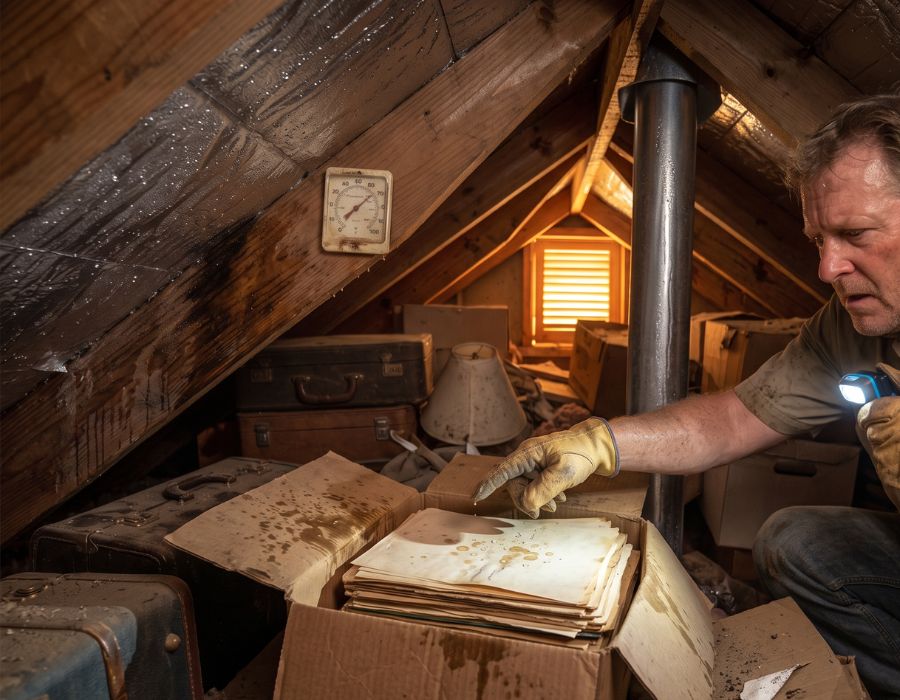
Repeated exposure can darken, swell, soften, or weaken wood materials. Roof sheathing may begin to separate, and fasteners may rust.
The damage may develop gradually before becoming visible from inside the home.
Mold and Mildew
Persistent moisture can create conditions that support mold and mildew on decking, framing, insulation, drywall, and stored materials.
JMK Roofing can address roofing defects that contribute to moisture. A qualified remediation professional should handle mold assessment and removal.
Interior Ceiling Damage
Moisture may soak through attic insulation before reaching the room below.
Possible warning signs include:
- Brown ceiling stains
- Peeling paint
- Bubbling drywall
- Musty odors
- Sagging ceiling materials
Painting over a stain will not solve the problem if moisture is still entering the attic.
How Is Summer Attic Condensation Corrected?
The correct solution depends on whether the source involves roofing, ventilation, HVAC equipment, insulation, exhaust routing, or air leakage.
Identify the Moisture Source
A proper evaluation should consider:
- Recent weather
- Air-conditioner use
- The location of damp materials
- Roof penetrations above the affected area
- Ductwork and refrigerant lines
- HVAC drains and pans
- Bathroom and dryer exhausts
- Attic ventilation
- Roof decking and flashing
The repair should address the source rather than only the visible stain.
Repair Roofing Defects
When water is entering through the roof, repairs may involve:
- Replacing damaged shingles
- Correcting chimney or wall flashing
- Repairing pipe boots
- Addressing skylight leaks
- Replacing damaged decking
- Repairing metal, slate, or storm-related damage
JMK Roofing provides roof repairs for asphalt shingles, metal roofing, slate, skylights, flashing, and storm damage.
Correct HVAC and Duct Problems
An HVAC professional may need to:
- Repair duct insulation
- Seal duct joints
- Insulate refrigerant lines
- Clear condensate drains
- Replace damaged drain pans
- Correct equipment or airflow problems
Wet duct insulation should not simply be covered. The moisture source needs to be fixed first.
Improve Air Sealing and Exhaust Routing
A qualified insulation or building-performance contractor may need to seal gaps around attic access points, lights, pipes, wiring, and open framing cavities.
Bathroom and dryer exhausts should also terminate outside, not inside the attic.
Evaluate Roof Ventilation
A roofing evaluation can identify blocked soffit vents, damaged ridge vents, missing baffles, or poorly balanced intake and exhaust.
Ventilation changes should align with the attic design. A vented attic and a conditioned attic require different approaches.
Can a New Roof Solve Attic Condensation?
Sometimes, but not always.
Roof replacement may help when condensation is connected to:
- Damaged roof decking
- Failing roofing materials
- Incorrect roof ventilation
- Deteriorated flashing
- A poorly designed roof assembly
A new roof will not fix:
- A clogged HVAC drain
- Bare or poorly insulated ductwork
- A disconnected bathroom exhaust
- An uninsulated refrigerant line
- Air leakage through the ceiling
The underlying moisture source should be identified before a roof replacement is recommended.
What Can Homeowners Check Safely?
From a safe attic access point, look for:
- Droplets on ducts, pipes, or nails
- Wet or matted insulation
- Dark stains on the roof decking
- Rusted fasteners
- Water near HVAC equipment
- Disconnected exhaust ducts
- Moisture around skylights or roof vents
- Musty odors
- Sagging ceiling materials
Take photos and note whether the problem appeared after rain or during heavy air-conditioning use.
Do not walk between attic joists, touch electrical components, or enter an attic during extreme heat. Ceiling drywall cannot support body weight, and summer attic temperatures can become dangerous quickly. (When Quick Repair Fixes Make Roof Damage Worse)
When Should You Call a Roofing Contractor?
Schedule a roofing estimate when:
- Water appears during or after rain
- Moisture is near flashing, skylights, valleys, or roof vents
- Shingles, slate, or metal panels are visibly damaged
- The roof recently experienced hail or strong winds
- Roof decking appears soft, dark, or deteriorated
- Water is reaching finished living areas
- You cannot determine whether the source is condensation or a roof leak
An HVAC contractor may also be needed when the moisture is concentrated around ducts, refrigerant lines, air handlers, or condensate equipment.
How JMK Roofing Helps
JMK Roofing has served Lancaster and surrounding communities since 2012.
Owner Ruben Beiler began working in roofing at age 17 and built the company around communication, integrity, customer satisfaction, efficiency, and dependable workmanship.
JMK Roofing offers:
- Residential roof repairs
- Asphalt shingle roofing
- Metal roofing
- Slate and cedar roofing
- Residential flat roofing
- Skylight services
- Storm damage restoration
- Roof tarping
- Insurance claim assistance
- Financing options for qualifying projects
JMK Roofing is a GAF Certified Contractor and an Owens Corning Preferred Contractor. A 10-year workmanship warranty backs qualifying projects.
The goal is to determine whether attic moisture is linked to the roofing system and to explain the next step clearly.
Your Roof, Our Reputation.